.png)
Promotional Gifting
How FMCG & Beverage Brands Use Promotional Merchandise to Win at the Last Mile
Your product is on the shelf. Your competitor’s product is on the shelf next to it. Same price point, roughly the same category, same kind of packaging. The retailer’s sales rep walks up to a customer who’s undecided.
Which brand does that rep recommend?
In FMCG and beverages, that moment — the last few feet between the shelf and the customer’s hand — is where brand battles are actually won and lost. And the brands that consistently win it aren’t always the ones with the biggest advertising budgets. They’re the ones with the best relationships at the trade level: with distributors, with stockists, with retailers, with the sales reps who actually talk to customers every day.
This guide is about how FMCG promotional merchandise in India fits into that picture — specifically how trade marketing teams and brand managers use branded merchandise to build and maintain the channel relationships that determine what gets recommended, what gets prime shelf placement, and what moves when a customer is genuinely undecided. We’ll cover why the last mile is a relationship problem, which products do the job at each level of the trade channel, and what most FMCG brands consistently get wrong.
The Last Mile Is a Relationship Problem
Spend enough time in FMCG trade marketing and a pattern becomes clear: the brands that win at the last mile aren’t just better products. They’re brands that have made the people in the channel feel valued.
A distributor who moves twelve brands has a choice about which ones get priority when stock is tight, which ones get the better delivery windows, which ones their field team pushes hardest. A retailer who carries six beverage brands has a choice about which ones get the eye-level shelf and which ones end up at the bottom. A counter salesperson has a choice about which brand they mention first when a customer asks for a recommendation.
None of these choices are made in boardrooms. They’re made on the ground, in warehouses and shops and kiosks across the country, by people who deal with dozens of brand representatives every week. The brand that stays top of mind isn’t always the one with the highest margin or the most advertising. It’s often the one that remembered to show up — consistently, tangibly, in a way that felt like more than a transactional visit.
“The brands that win at the last mile are the ones that made the trade channel feel valued long before a customer ever walked in.”
This is where trade marketing gifts and promotional merchandise earn their place. Not as expensive gestures, but as consistent, well-chosen touchpoints that keep a brand present in the trade channel’s daily environment.
Why Promotional Merchandise Specifically? What It Does That Advertising Can’t
Mass advertising builds awareness with consumers. Trade marketing merchandise does something different: it builds relationships with the people who influence what consumers actually buy.
A distributor who has your branded item on their desk, your keyring on their keys, your bottle opener at their counter — that person sees your brand every day, in their own space, through an object they chose to keep. That’s a fundamentally different kind of brand presence than a billboard or a digital ad.
8.4 billion impressions per day
Promotional products generate more impressions per rupee than almost any other advertising medium — ASI Global Ad Impressions Study
Three things make branded merchandise particularly effective in FMCG trade channels:
- Longevity: A quality branded item stays in a distributor’s office or a retailer’s counter for months. A sales visit lasts twenty minutes. The merchandise outlasts the visit by a factor of hundreds.
- Daily visibility: Items that are used every day — keyrings, pens, bottle openers — keep your brand in the peripheral vision of your trade partners constantly. Not as advertising, but as part of their everyday environment.
- Reciprocity: When a brand gives something of genuine value, the recipient feels a pull to reciprocate. In a trade context, that often means a little more goodwill, a little more shelf space, a recommendation made when it wasn’t strictly necessary.
The FMCG Trade Channel: Who You’re Gifting and What They Need
The FMCG distribution chain has multiple levels, and each one has a different relationship with your brand and a different set of needs from promotional merchandise. Getting the right product to the right person matters more than spending more.
Distributors and super-stockists
This is your highest-value trade relationship. Distributors control access to entire territories. A distributor who is enthusiastic about your brand is worth more than any amount of end-consumer advertising in that territory.
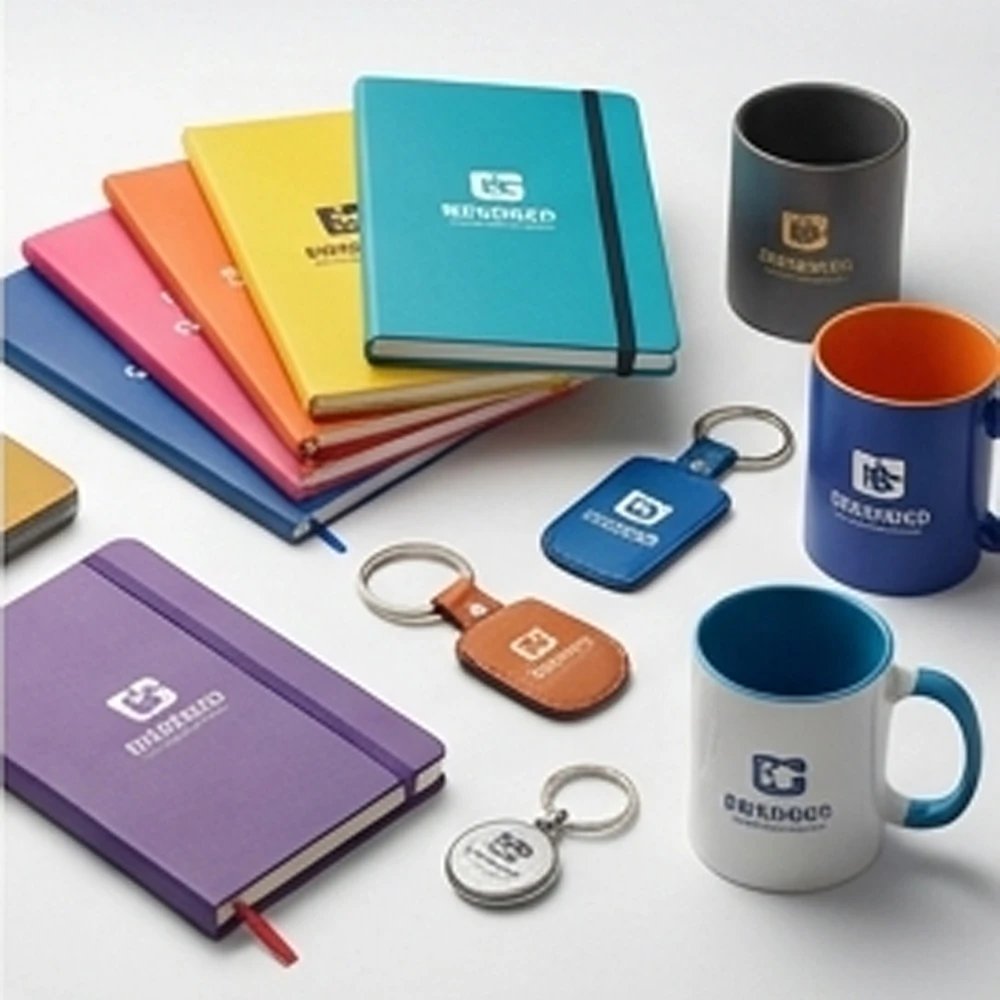
The gifting brief at this level: quality over quantity. Something that earns a permanent place in the distributor’s office or personal space. A custom logo keyring in metal with clean engraving, a quality diary and pen set at Diwali, a well-finished desk piece for milestone occasions. The item should feel considered — not like a standard field kit hand-out, but like something that acknowledges the relationship has value.
For beverage brands specifically, the category has a natural advantage here: the products themselves are social and celebratory. A branded bar accessory set, a quality bottle opener with custom logo, or a beverage-related desk piece plays into the brand’s identity in a way that feels native rather than generic.
Retailers and shop owners
The retailer is the last human touchpoint before the customer. Their counter space, their recommendations, and their enthusiasm for your product are commercial assets. Treat them as such.
Merchandise for retailers needs to do two things: build personal goodwill and create brand presence at the point of sale. These are different briefs that can be served by the same product category. A branded item that a retailer keeps at their counter , a pen stand, a bottle opener, a keyring , builds both simultaneously. It’s a personal gift they chose to keep, and it’s a brand visibility asset sitting at the exact point where purchase decisions are made.
THE COUNTER VISIBILITY OPPORTUNITY
Whatever sits on a retailer’s counter is seen by every customer who walks in. A branded bottle opener or pen stand that earns counter space is delivering impressions to an active purchasing audience all day, every day. That’s not a gift , it’s a placement.
Field sales reps and van salesmen
Your brand’s field team is on the road every day, interacting with dozens of retailers and sub-distributors. What they carry reflects on the brand. What they hand over is your brand’s physical handshake in the market.
For this level, volume and durability are the brief. Items that an MR or van salesman can hand out freely without watching the budget, that hold up to daily handling, and that look sharp enough to reflect well on the brand. Branded pens with logo, rubber or metal customized keychains, and compact branded accessories fit this tier well. Per-unit cost matters here — but quality still sets the floor.
Channel partners and sub-distributors at scale
When you’re running a channel incentive or loyalty programme across a large network — hundreds of sub-distributors, thousands of retail touchpoints — the economics shift. You need something that works at volume without quality falling off. FMCG promotional merchandise India campaigns at this scale typically anchor on two or three core products: a high-volume everyday item, a mid-tier relationship piece for key accounts, and a premium item reserved for top performers and milestone recognition.
Products That Actually Work in FMCG and Beverage Trade Marketing
Not all promotional products translate equally to the FMCG context. The field is physical, fast-moving, and unforgiving of items that feel generic or cheap. Here are the categories that consistently earn their place.
Bottle openers
For beverage brands, the promotional bottle opener is one of the most category-native products available. It’s used in the exact consumption moment your brand is associated with. It sits behind bars, on counters, and in the pockets of the people who open your products every day. Every time someone uses it, they’re interacting with your brand at the moment of maximum product relevance.
A well-made, heavy-duty bottle opener with clean logo engraving doesn’t just work as a promotional item — it works as a product endorsement. It says your brand belongs in this environment. A flimsy one says the opposite.
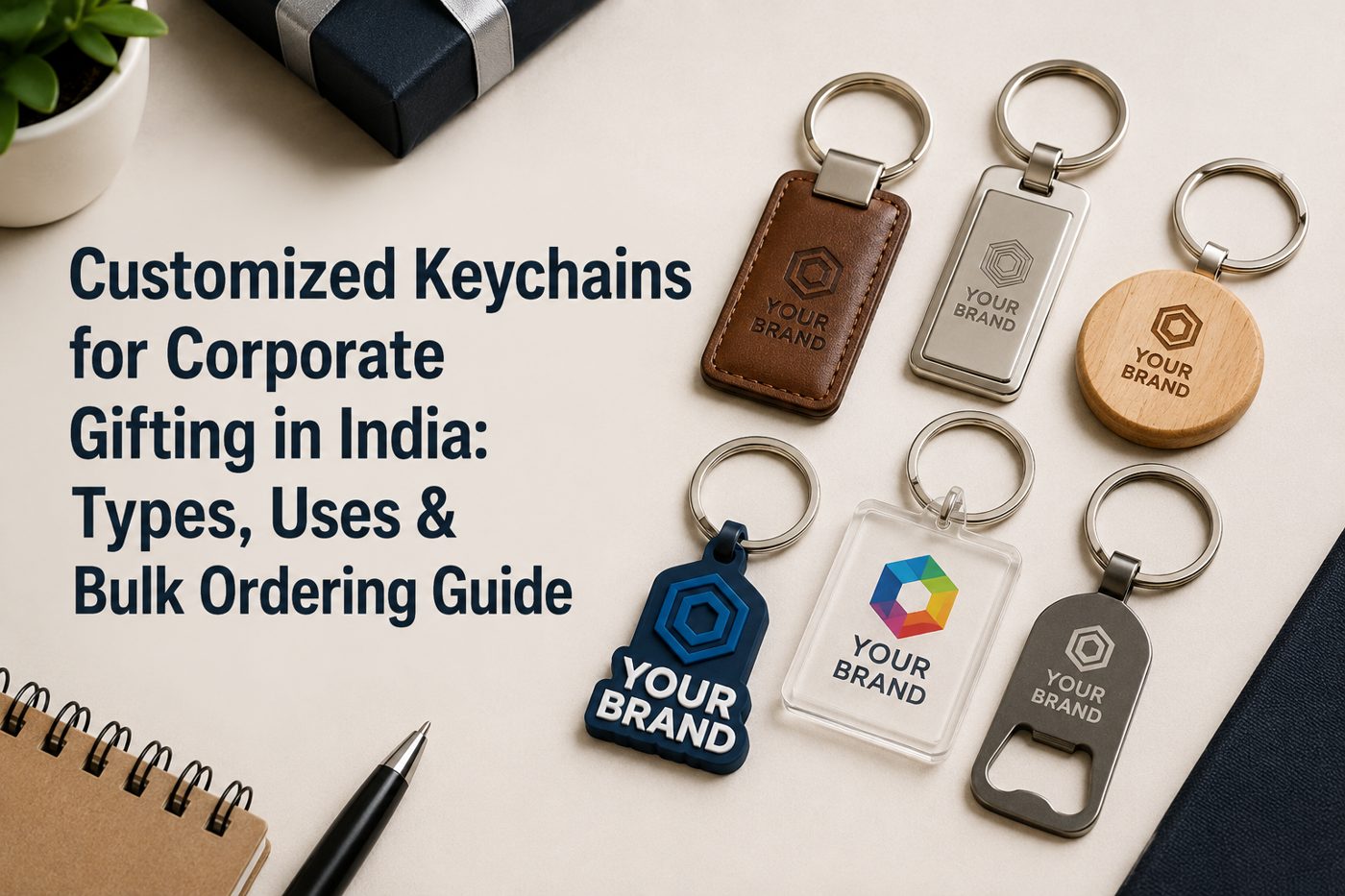
Custom logo keyrings
The custom logo keyring for beverage brands is a quiet workhorse. Keys are handled multiple times a day, in every environment. A quality metal keyring with your brand on it travels everywhere your distributor or retailer goes — to the warehouse, to the market, home. It’s not seen once; it’s seen hundreds of times a week by the person carrying it and everyone around them.
For FMCG and beverage brands running distributor outreach at scale, keyrings hit the best cost-to-impression ratio of almost any product category. A small investment per unit, multiplied across a network of hundreds, creates sustained brand presence at a cost that mass advertising can’t match for the same audience.
Branded pens
Overlooked by brands that think pens are too simple, relied on by brands that understand the maths. A quality branded pens with logo is used daily, seen by multiple people, and lives on desks and counters for months. For retailer and distributor outreach, pens are the most reliable volume product in the kit — genuinely useful, easy to distribute in high numbers, and impactful when the quality is right.
Counter display accessories
Pen stands, desk organisers, and small counter accessories serve a dual purpose at the retail level: they’re a personal gift to the retailer and a brand visibility asset at the point of purchase. A branded pen stand that earns counter space is delivering your brand’s name to every customer who approaches that counter. For FMCG brands, this is one of the most underused product categories in trade marketing.
Festive and seasonal gifting sets
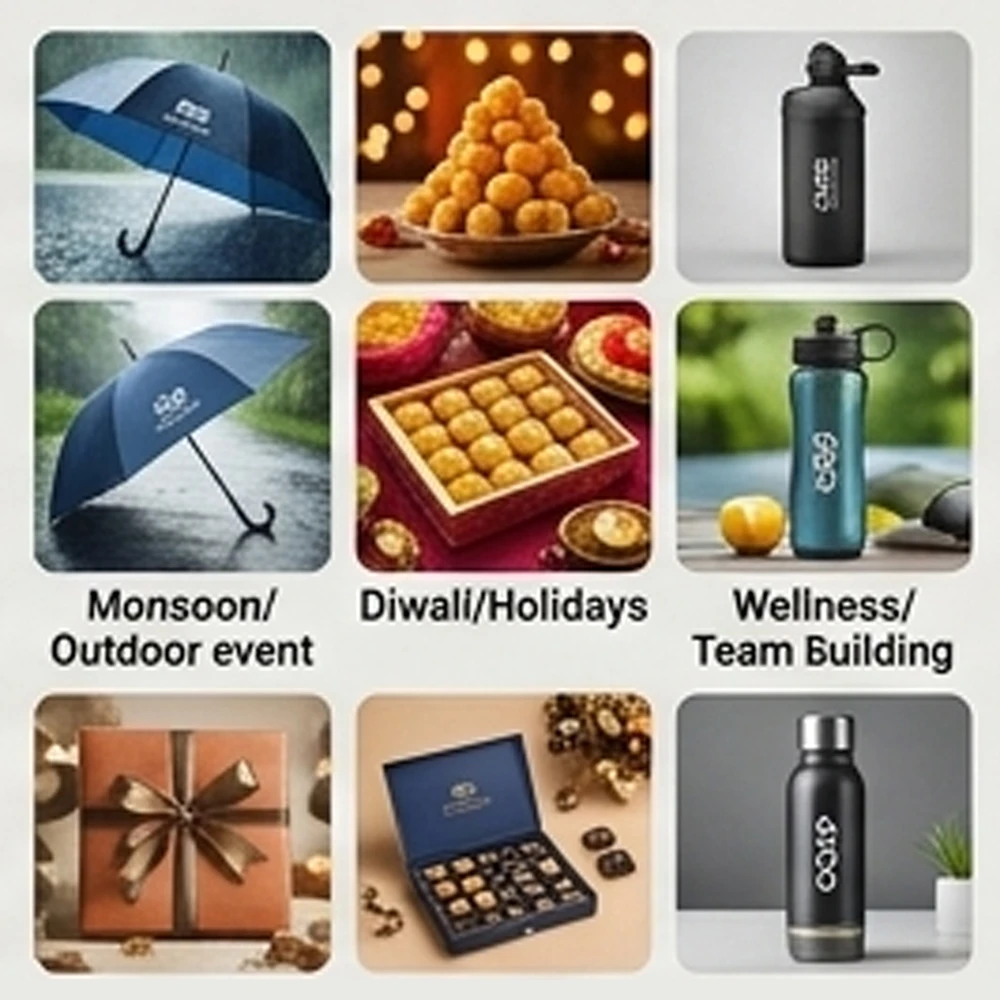
Diwali, New Year, and the financial year-end are the moments when distributor and retailer relationships are either reinforced or quietly downgraded. A quality gifting set — a diary and pen, a branded accessory pack, a small premium item — says the relationship matters beyond the transaction. At Kee Creation, FMCG companies typically run two seasonal gifting orders a year for their key channel partners: one at Diwali and one around the financial year-end. Brands that do this consistently report noticeably stronger channel relationships heading into the next cycle.
How to Build a Trade Marketing Merchandise Programme That Actually Works
Most FMCG companies approach trade marketing merchandise reactively — a push before a seasonal campaign, a kit for a new product launch, something for the annual distributor conference. That’s a starting point, but it’s not a programme. Here’s how to think about it properly.
Map the channel and segment by value
Your distributor network is not homogeneous. Some distributors move ten times the volume of others. Some retailers get ten times the footfall. Start by segmenting your channel by commercial value and assign gifting tiers accordingly — premium for top-tier channel partners, standard for mid-tier, volume for the broad base. This prevents you from spending the same amount on everyone regardless of their importance to your business.
Build a year-round gifting calendar
The brands that build the strongest channel relationships don’t appear once at Diwali and go quiet for eleven months. Map out every opportunity to show up: new product launches, quarterly performance acknowledgements, festive windows, distributor anniversaries, and campaign kickoffs. Each moment is an opportunity to reinforce the relationship with something tangible.
Match the product to the moment and the recipient
A promotional bottle opener is perfect for a beverage distributor’s counter. It’s the wrong call for a head office meeting with a procurement team. A premium diary set is right for a top-tier distributor at Diwali. It’s an odd choice for a field van salesman’s daily kit. The product should feel like it was chosen for the person, not picked from a catalogue and distributed uniformly.
Brief your supplier properly before the season, not during it
FMCG campaigns are deadline-driven. A product launch in March means the trade marketing kit needs to be in field hands by late February, which means the order needs to be confirmed in January, which means the brief needs to go to the supplier in December. Work backwards from your campaign dates and add buffer for approval cycles. The biggest cause of rushed, poor-quality trade marketing merchandise in FMCG is ordering too late.
What FMCG Brands Most Often Get Wrong
Treating all channel levels the same
One product, one quality tier, distributed uniformly across a distributor network with wildly different commercial significance. A top-five distributor who moves thirty percent of your volume receiving the same item as a small sub-stockist signals that you haven’t thought about the relationship at all. Tiering is not complicated and it is not expensive. It just requires a decision made in advance.
Choosing the cheapest product in the category
In trade channels, your promotional merchandise is handled by people who deal with hundreds of brands. They know quality. A flimsy keyring, a pen that stops working, a bottle opener that bends on first use — these don’t just fail to build goodwill. They actively damage the brand’s image at the trade level. The cost difference between a product that holds up and one that doesn’t is marginal per unit. The impression difference is not.
Campaign merchandise without a clear purpose
A branded item distributed without context — no tie-in to a campaign, no acknowledgement of a relationship, no occasion — lands as clutter. The product needs a reason to be there. Launch of a new SKU, recognition of a performance milestone, festive season appreciation — the context gives the item meaning. Without it, it’s just another thing in a bag.
Ignoring the field team’s experience
Whatever your field reps are carrying reflects on your brand before they say a word. A kit that’s embarrassing to hand over, products that feel cheap in the hand, items that the rep wouldn’t want to receive themselves — these undermine the field team’s confidence and credibility at the exact moment you need them to be ambassadors for your brand. Ask your field team what they’d be proud to hand over. The answer is usually more specific and more useful than anything a marketing brief alone will produce.
The Bottom Line
The last mile in FMCG and beverages is not won in advertising decks or brand guidelines. It’s won in warehouses and counters and kirana stores, by field teams building relationships with people who make real-time decisions about what gets recommended and what gets prime shelf space.
Promotional merchandise, done well, is one of the most cost-effective tools for winning those relationships. Not because it buys loyalty — it doesn’t — but because it keeps your brand present, tangible, and valued in the daily environment of the people who matter most to your last-mile performance.
If you’re building or refreshing your trade marketing merchandise programme — from promotional bottle openers for your beverage distributor network to custom logo keyrings and seasonal gifting sets for key channel partners — let’s talk.
Frequently Asked Questions
What is trade marketing merchandise and how do FMCG brands use it?
Trade marketing merchandise refers to branded physical items given to distributors, retailers, and channel partners — not to end consumers — with the goal of building relationships and brand presence at the trade level. In FMCG, this includes items like custom logo keyrings, branded pens, bottle openers, and seasonal gifting sets. The purpose is to keep a brand top-of-mind with the people who influence shelf placement, stock priorities, and sales recommendations at the point of purchase.
Why do beverage brands use promotional bottle openers as trade marketing gifts?
The promotional bottle opener is category-native for beverage brands — it’s used in the exact moment of product consumption. For distributor and retailer gifting, it doubles as a personal gift and a point-of-sale brand asset: a well-made branded opener that earns counter or bar space delivers impressions to an active purchasing audience every time someone watches it being used. It also signals brand confidence — your logo belongs in the consumption environment.
What is the right budget for channel partner gifting in FMCG India?
Budget should follow channel value. A workable framework: ₹75–₹200 per unit for high-volume field distribution (van salesmen, broad retailer networks), ₹250–₹600 for mid-tier channel partners and regular retailer relationships, and ₹600–₹1,500+ for key distributor and top-account seasonal gifting. These are illustrative ranges — your actual numbers depend on category margins and network size. The principle is that the top tier of your channel should receive something that feels meaningfully different from the volume-level product.
How do custom logo keyrings perform as FMCG promotional merchandise?
Consistently well, particularly for distributor and field-level outreach. A custom logo keyring is carried daily, seen in multiple environments, and — if made in metal with clean engraving — lasts for years. For brands distributing to large channel networks where per-unit cost matters, the cost-to-daily-impression ratio is one of the best in the promotional merchandise toolkit. The key is quality: metal keyrings with engraved logos outlast and outperform printed or moulded rubber variants in terms of durability and perceived value.
How far in advance should FMCG brands order trade marketing merchandise?
For most customised products, four to six weeks from artwork approval to delivery is the standard lead time. For FMCG campaigns tied to specific launch dates or festive windows, eight weeks is a safer planning horizon — it builds in time for internal approvals, artwork revisions, and the delivery buffer that event-tied orders always need. Festive windows like Diwali are high-demand periods for suppliers; orders placed in September for October delivery risk delays. August ordering is the safe call.










.png)
.png)
.png)
.png)
.png)